Dangerous Goods Shipping Documents Guide for Sea Freight
Shipping dangerous goods (also known as hazardous cargo or DG cargo) by sea requires strict documentation and compliance. Unlike general cargo, even a small documentation error can lead to shipment delays, penalties, or outright rejection at port.
Many exporters are unaware that documentation is the most critical part of dangerous goods logistics. Understanding the required paperwork is essential for smooth and compliant shipping.
This guide explains the key documents required for shipping hazardous cargo by sea from India and how to avoid common mistakes.
What Are Dangerous Goods in Sea Freight
Dangerous goods refer to substances that pose risks to health, safety, property, or the environment during transport. These are regulated under International Maritime Organization (IMO) guidelines and classified into nine categories.
Common examples include:
- Chemicals
- Flammable liquids
- Batteries
- Corrosive substances
- Explosives
Shipping such cargo requires proper classification, labeling, packaging, and documentation.
Why Documentation Is Critical in Hazardous Cargo Shipping
Documentation ensures that all parties involved in the shipment understand the risks and handling requirements of the cargo.
Incorrect or incomplete documentation can result in:
- Shipment rejection at port
- Regulatory penalties
- Delays in customs clearance
- Safety risks during transport
For this reason, documentation is not just procedural — it is a compliance requirement.
Key Documents Required for Dangerous Goods Shipping
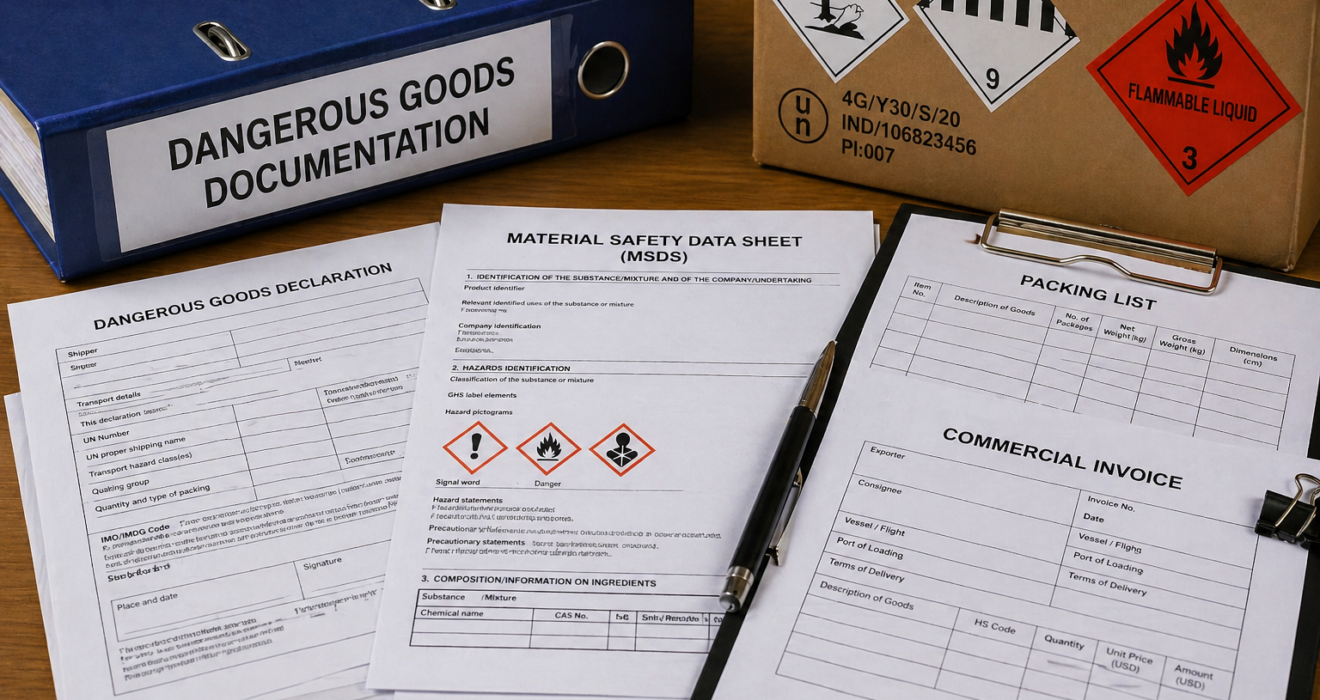
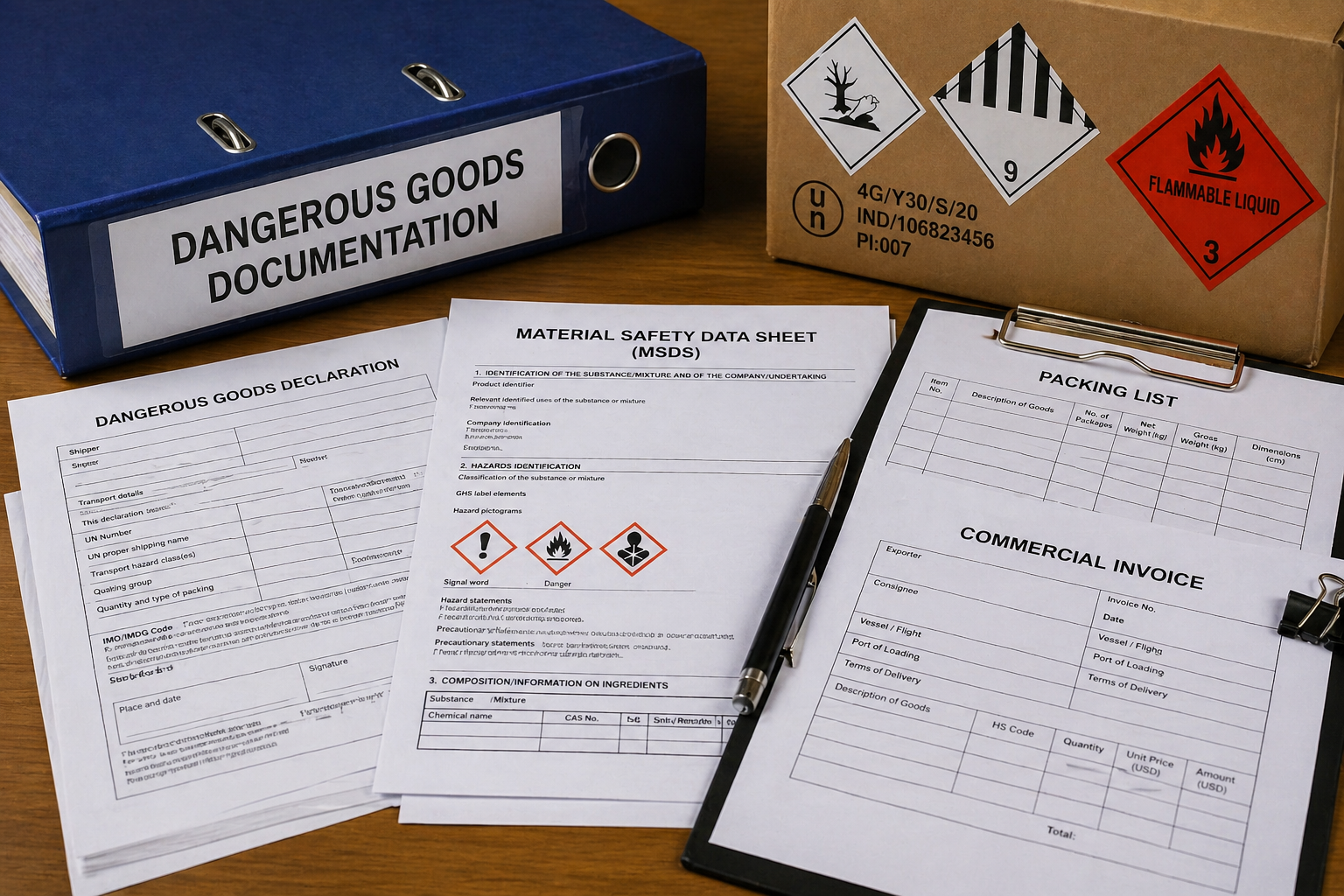
1. Material Safety Data Sheet (MSDS)
The MSDS provides detailed information about the chemical composition, hazards, handling, and emergency measures for the cargo.
It is used to:
- Identify the correct IMO classification
- Determine packaging requirements
- Ensure safe handling
An outdated or incorrect MSDS can lead to shipment rejection.
2. Dangerous Goods Declaration (DGD)
The DGD is a formal declaration confirming that the cargo has been:
- Correctly classified
- Properly packed
- Accurately labeled
It includes:
- UN number
- Proper shipping name
- Hazard class
- Packing group
This document must be prepared and signed by a qualified person.
3. Commercial Invoice
The commercial invoice provides details about:
- Buyer and seller
- Cargo value
- Description of goods
For dangerous goods, the description must match the declared classification.
4. Packing List
The packing list outlines:
- Number of packages
- Weight and dimensions
- Packaging type
It must align with DG packaging standards.
5. Labeling and Marking Compliance
Dangerous goods must carry specific labels and markings, including:
- Hazard labels
- UN numbers
- Handling instructions
Incorrect labeling is one of the most common reasons for shipment delays.
Additional Documents (When Applicable)
Depending on cargo and destination, additional documents may be required:
- Container Packing Certificate
- Shipper’s Declaration
- Test certificates (for certain chemicals)
- Port authority approvals
Common Documentation Mistakes
Exporters often face issues due to:
- Incorrect DG classification
- Mismatch between MSDS and DGD
- Missing hazard labels
- Incomplete documentation
- Using non-compliant packaging
These errors can delay shipments by several days and increase costs.
Documentation Process for Sea Freight DG Shipping
A typical documentation workflow includes:
- Cargo classification based on MSDS
- Preparation of DGD
- Verification of packaging and labeling
- Documentation review by freight forwarder
- Submission to shipping line and port authorities
Each step must be handled carefully to ensure compliance.
Why Work with Aipex Worldwide
Dangerous goods shipping requires specialized knowledge and experience. Aipex Worldwide supports exporters with:
- Accurate DG classification and documentation
- Preparation and verification of MSDS and DGD
- Compliance with IMO regulations
- Coordination with shipping lines and ports
- End-to-end hazardous cargo logistics
This reduces the risk of delays, penalties, and shipment rejection.
Get Expert Support
If you are planning to ship hazardous cargo by sea, correct documentation is essential.
Aipex Worldwide provides:
- Documentation support
- Compliance checks
- End-to-end DG logistics solutions
Contact our team to ensure your shipment is handled professionally and without delays.
In dangerous goods shipping, documentation is not optional — it is the foundation of compliance. Proper preparation ensures safe transport, faster clearance, and reliable delivery. Contact Aipex Worldwide Now