
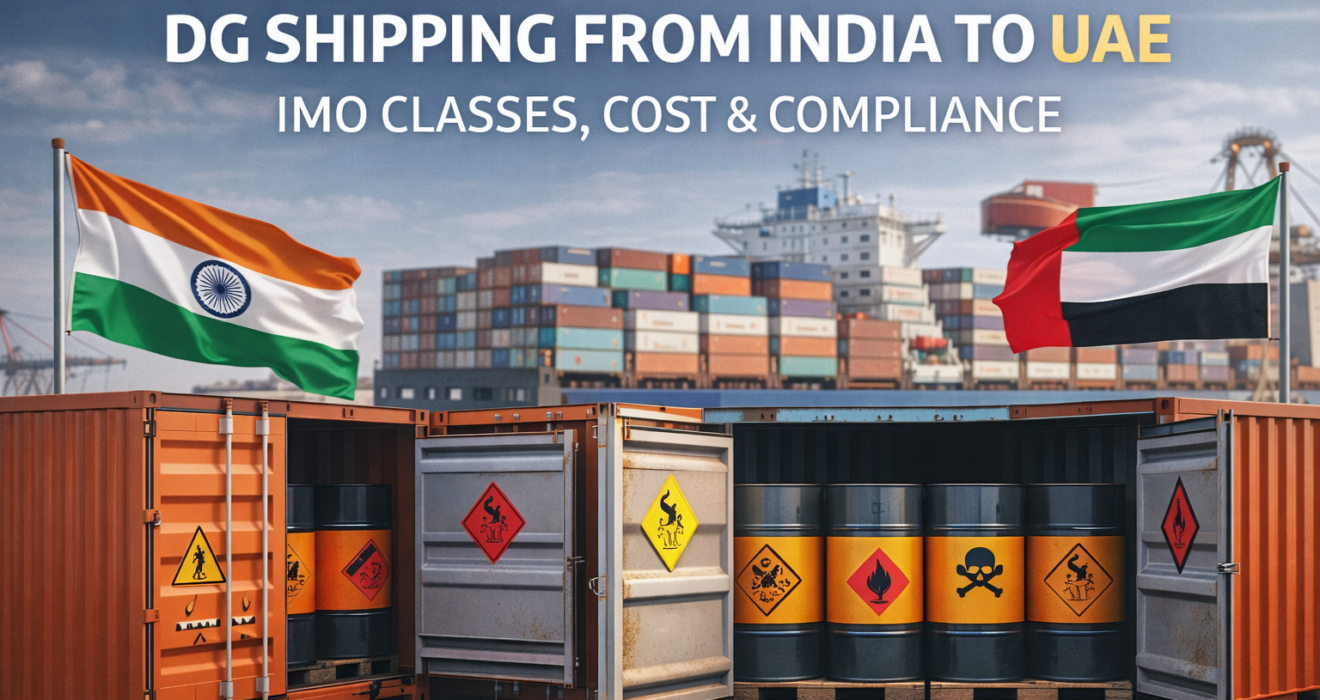
DG Shipping from India to UAE: IMO Classes, Cost & Compliance
If You Get DG Shipping Wrong, It Gets Expensive
Shipping dangerous goods is not like regular cargo.
One mistake — wrong classification, missing declaration, or improper packaging — and your shipment gets stuck, fined, or rejected.
That’s why DG shipping India UAE requires more than just booking space on a vessel. It requires compliance, planning, and precision.
Let’s break it down clearly.
First: What Counts as Dangerous Goods?
Dangerous goods (DG) include materials that pose risks during transport — such as:
-
Chemicals
-
Flammable liquids
-
Batteries
-
Gases
-
Corrosive substances
These are regulated globally under the International Maritime Organization through the IMDG Code.
If your cargo falls under DG, you cannot treat it like normal freight.
IMO Classes Explained (What You’re Actually Shipping)
Every DG shipment must be classified correctly.
Here’s how it works:
-
Class 1: Explosives
-
Class 2: Gases
-
Class 3: Flammable liquids
-
Class 4: Flammable solids
-
Class 5: Oxidizers
-
Class 6: Toxic substances
-
Class 7: Radioactive
-
Class 8: Corrosives
-
Class 9: Miscellaneous DG
Wrong classification = shipment delay or rejection
That’s why most exporters rely on experts offering hazardous cargo shipping services to avoid costly mistakes.
What Does DG Shipping Cost from India to UAE?
Let’s be practical.
The cost depends on:
-
DG class (higher risk = higher cost)
-
Packaging requirements
-
Documentation complexity
-
Carrier acceptance
-
Port handling charges
DG shipments typically cost 20–50% more than normal cargo.
However, if your cargo volume is high, using FCL ocean freight solutions can reduce per-unit cost significantly.
For smaller shipments, LCL shipping services may still work — but only if the DG class is accepted for consolidation.
Compliance: Where Most Shipments Fail
This is the biggest problem area.
To move DG cargo successfully, you need:
-
DG Declaration (DGD)
-
Material Safety Data Sheet (MSDS)
-
Proper labeling & packaging
-
Correct UN number classification
In addition, Indian export compliance must align with rules from Directorate General of Shipping India.
👉 Missing even one document can stop your shipment.
Common Mistakes That Cost You Money
Most exporters lose money due to:
-
Incorrect DG classification
-
Non-compliant packaging
-
Last-minute documentation
-
Choosing wrong shipping method
As a result, shipments get delayed or rejected.
👉 This is where working with DG specialists changes everything.
How to Make DG Shipping Smooth (And Profitable)
Smart exporters follow a simple approach:
-
Classify cargo correctly
-
Prepare documentation in advance
-
Choose the right shipping mode (FCL vs LCL)
-
Work with experienced DG handlers
Also, if your cargo is oversized or complex, combining DG with break bulk shipping solutions may be more efficient.
Why Businesses Choose Aipex for DG Shipping
DG logistics is not just about moving cargo.
It’s about:
✔ Compliance
✔ Safety
✔ Cost control
At Aipex Worldwide, we handle DG shipments end-to-end — from classification to delivery — ensuring your cargo moves without delays or penalties.
Shipping dangerous goods from India to UAE?
Get expert support from Aipex Worldwide and avoid costly compliance mistakes.