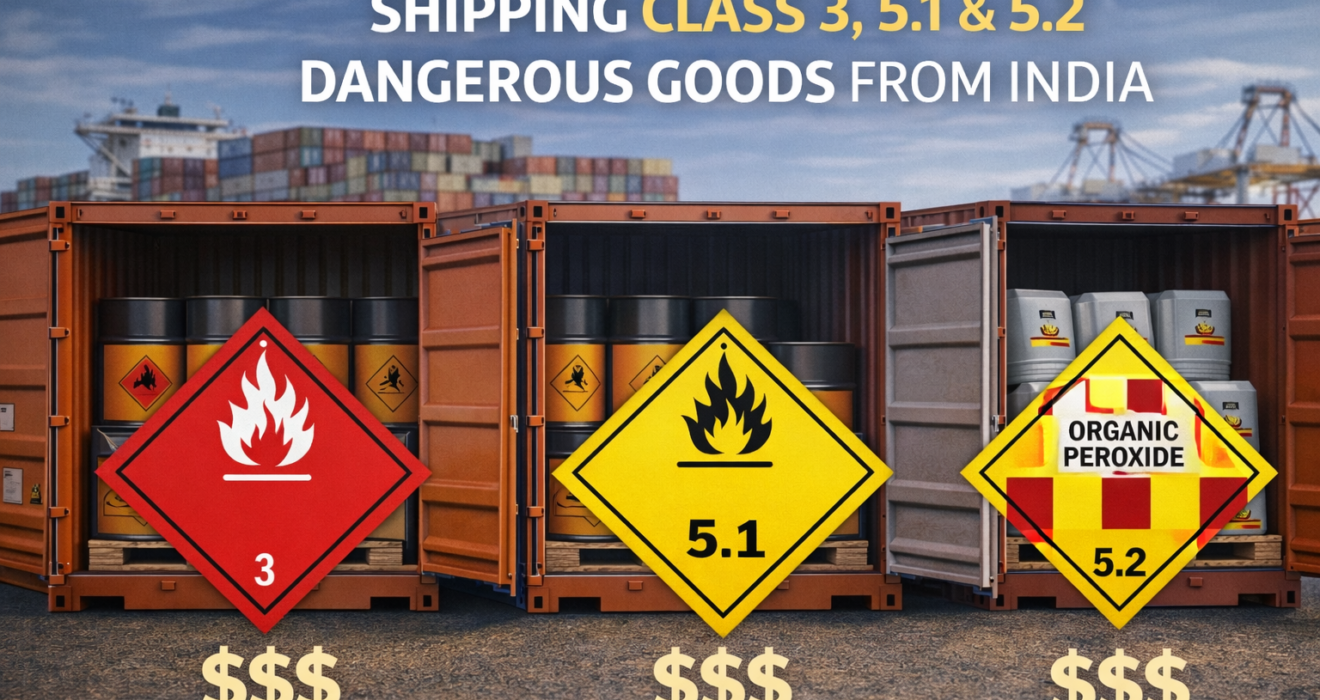
Shipping Class 3, 5.1 & 5.2 Dangerous Goods from India
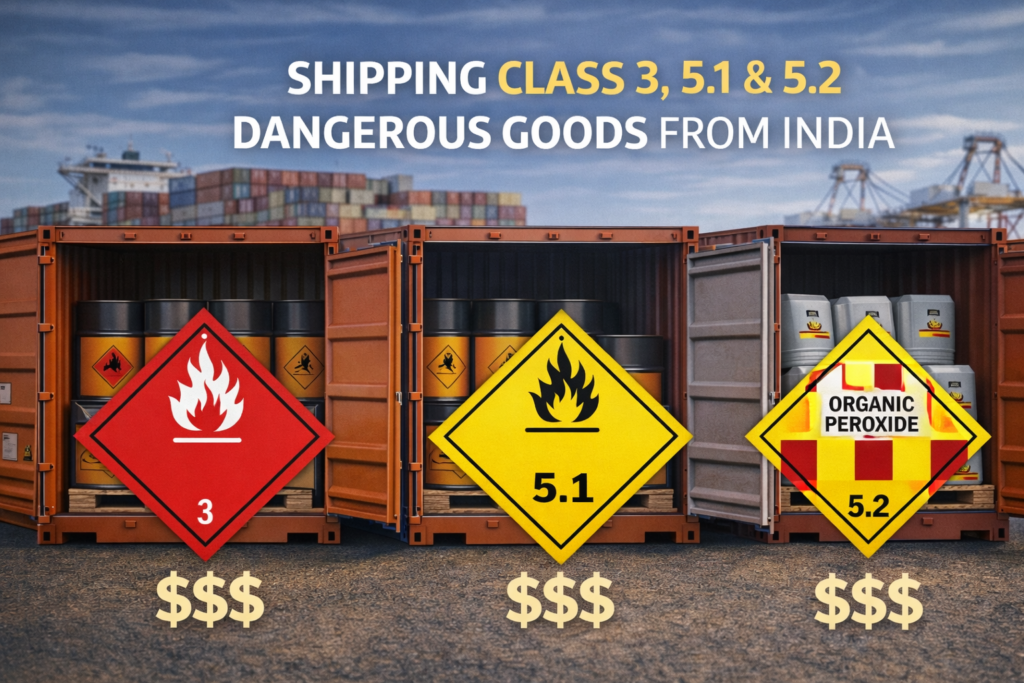
Shipping Class 3, 5.1 & 5.2 Dangerous Goods from India Is Not Routine Cargo
If you’re exporting flammable liquids, oxidizers, or organic peroxides, you’re dealing with some of the most regulated cargo in ocean freight.
Mistakes don’t just cause delays.
They cause rejections, penalties, and serious safety risks.
That’s why Class 3 5.1 5.2 shipping requires strict compliance with international maritime regulations.
Let’s break it down clearly.
Understanding the Risk Categories
These DG classes fall under the IMDG Code governed by the International Maritime Organization.
Class 3 – Flammable Liquids
Includes:
-
Paints
-
Solvents
-
Chemicals
-
Fuel-based products
These cargo types carry fire risk during transport.
Class 5.1 – Oxidizing Substances
Includes:
-
Nitrates
-
Bleaching agents
-
Chemical oxidizers
These substances intensify combustion when exposed to flammable material.
Class 5.2 – Organic Peroxides
Includes:
-
Certain chemical compounds
-
Temperature-sensitive materials
These materials may decompose rapidly and require controlled handling.
What Makes Shipping These Classes Complex?
Unlike general cargo, these shipments require:
-
Correct UN number classification
-
DG declaration (DGD)
-
MSDS documentation
-
IMDG-compliant packaging
-
Proper labeling & placarding
In addition, Indian export documentation must align with regulations from Directorate General of Shipping India.
Missing one document can stop your shipment immediately.
Cost Factors for Class 3, 5.1 & 5.2 Shipping
DG shipping costs are higher than standard cargo.
Why?
Because carriers charge for:
-
Risk handling
-
Special stowage requirements
-
Additional port supervision
-
Segregation compliance
In many cases, DG freight can cost 20–60% more than non-hazardous cargo as there will be HAZ Surcharge depending upon on the type of cargo and class.
If your shipment volume is large, using FCL ocean freight solutions often reduces overall per-unit cost.
For smaller loads, LCL shipping services may work — but only if the carrier allows consolidation for your specific DG class (Subject to approval).
Common Mistakes Exporters Make
Most delays happen because of:
-
Incorrect UN classification
-
Improper packaging
-
Incomplete MSDS
-
Late submission of DG declaration
As a result, shipments get rolled to the next vessel — increasing storage and demurrage costs.
Working with specialists in hazardous cargo shipping services significantly reduces this risk.
Best Practices for Safe DG Export from India
Smart exporters follow a structured process:
-
Confirm classification before booking
-
Validate packaging compliance
-
Submit documentation early
-
Choose correct shipping mode
-
Coordinate stowage with carrier
In addition, early coordination prevents last-minute vessel rejection.
Why Class 3, 5.1 & 5.2 Require Expert Handling
These classes involve fire and chemical reaction risks. Therefore, safety protocols during loading, stowage, and transit become critical.
If your cargo requires special container placement or temperature monitoring, combining DG handling with break bulk shipping solutions may sometimes be more efficient.
Shipping Class 3, 5.1 or 5.2 dangerous goods from India?
Avoid compliance risks and cost overruns.
Get expert DG support from Aipex Worldwide before you book your shipment.