
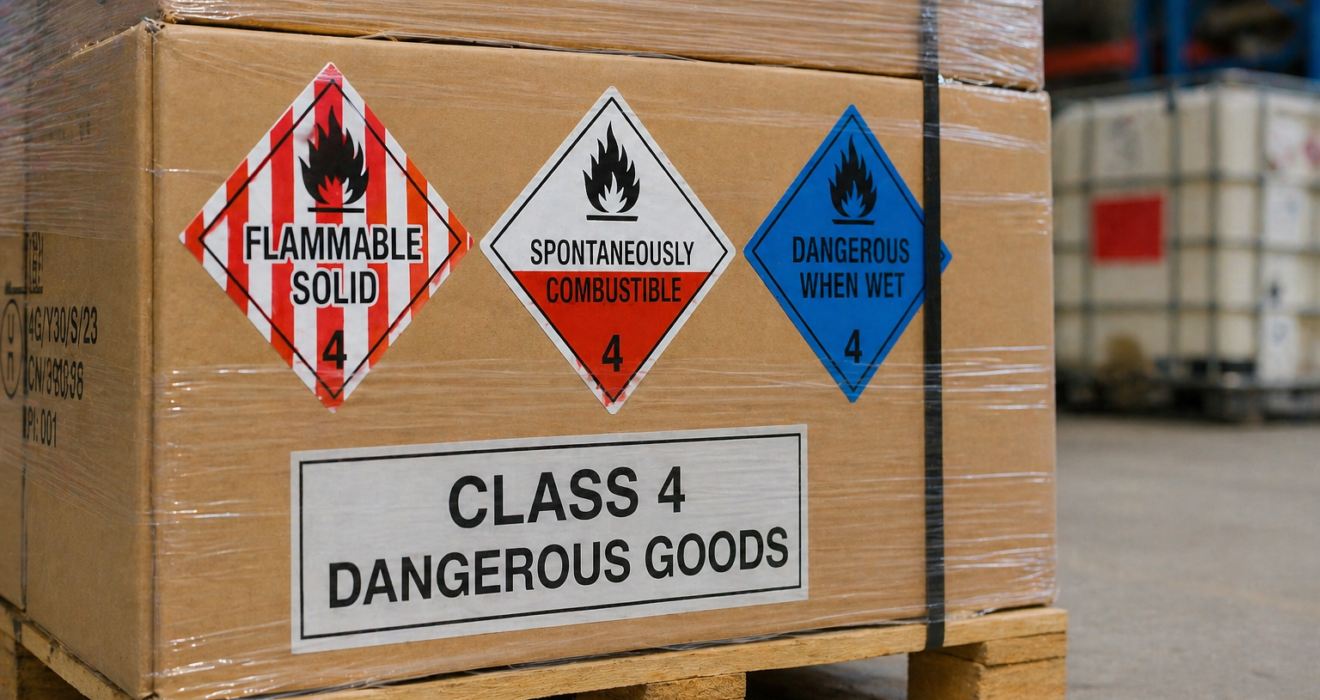
Class 4 Dangerous Goods Shipping Guide
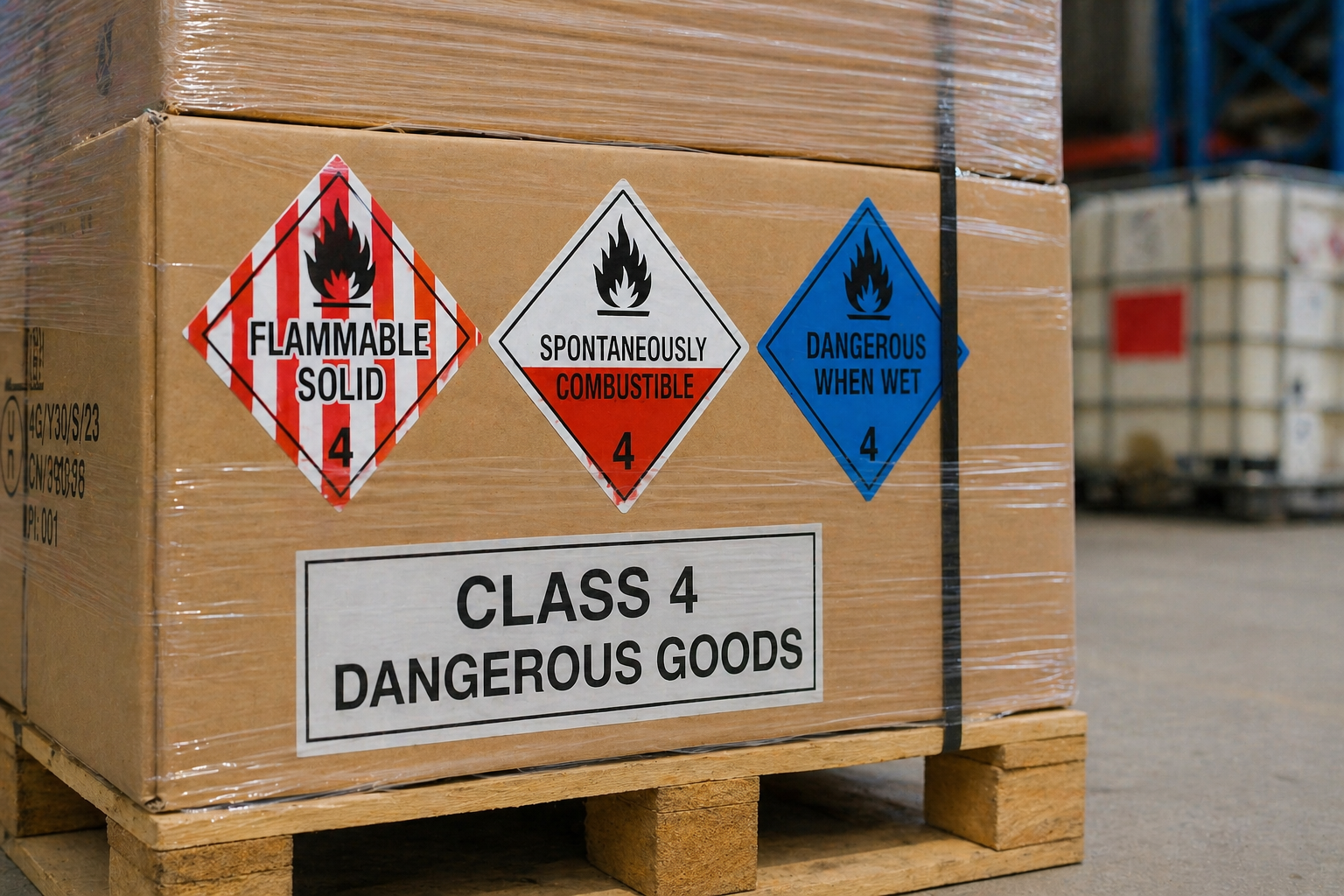
Class 4 dangerous goods include materials that can ignite easily, react with air, or produce flammable gases when exposed to water. These substances present significant risks during handling and transport, especially in sea freight operations.
Exporters dealing with such cargo must ensure strict compliance with International Maritime Organization (IMO) regulations. Failure to meet these requirements can result in shipment delays, safety incidents, or regulatory penalties.
This guide explains the classification, handling requirements, and shipping process for Class 4 dangerous goods from India.
What Are Class 4 Dangerous Goods
Class 4 dangerous goods are divided into three categories based on their behavior:
- Flammable solids
- Substances liable to spontaneous combustion
- Substances that emit flammable gases when in contact with water
These materials are sensitive to environmental conditions such as temperature, moisture, and friction, making proper handling essential.
Classification of Class 4 Dangerous Goods
Class 4.1 – Flammable Solids
These are materials that can ignite through friction, heat, or contact with a flame.
Examples include:
- Sulfur
- Metal powders
- Certain industrial chemicals
Shipping considerations:
- Protection from ignition sources
- Secure packaging to prevent friction
- Controlled storage conditions
Class 4.2 – Substances Liable to Spontaneous Combustion
These materials can ignite without an external ignition source, often due to reaction with air.
Examples include:
- Coal
- Oily cotton waste
- Phosphorus
Shipping considerations:
- Air-tight packaging
- Temperature monitoring
- Prevention of oxidation
Class 4.3 – Substances Dangerous When Wet
These materials react with water to release flammable gases.
Examples include:
- Sodium
- Calcium carbide
- Potassium
Shipping considerations:
- Strict moisture control
- Waterproof packaging
- Segregation from liquids
Packaging and Handling Requirements
Class 4 cargo must be packed and handled according to strict guidelines:
- Use of approved UN-certified packaging
- Proper labeling and hazard marking
- Protection from moisture and temperature changes
- Secure loading and lashing in containers or vessels
Handling procedures must minimize exposure to:
- Heat
- Friction
- Water
Documentation Requirements
Accurate documentation is essential for Class 4 shipping.
Required documents include:
- MSDS (Material Safety Data Sheet)
- Dangerous Goods Declaration (DGD)
- Commercial Invoice
- Packing List
- Labeling and marking compliance
All documentation must clearly indicate the correct subclass (4.1, 4.2, or 4.3).
Shipping Process from India
A standard process includes:
- Classification and hazard identification
- Packaging and labeling compliance
- Documentation preparation
- Booking with DG-approved carriers
- Port handling and inspection
- Ocean transport
- Destination clearance
Each step requires coordination and compliance verification.
Cost Factors
Shipping costs depend on:
- Subclass (4.1, 4.2, 4.3)
- Cargo volume and weight
- Packaging requirements
- Handling complexity
- Destination and route
Due to risk factors, Class 4 shipments typically involve higher costs than standard cargo.
Common Challenges
Exporters frequently face:
- Incorrect classification
- Exposure to moisture or air
- Improper packaging
- Documentation errors
These issues can result in cargo damage, delays, or rejection at port.
Why Choose Aipex Worldwide
Aipex Worldwide provides specialized solutions for Class 4 dangerous goods shipping, including:
- Expertise in handling 4.1, 4.2, and 4.3 cargo
- Compliance with IMO regulations
- Documentation and packaging guidance
- Coordination with shipping lines and ports
- End-to-end logistics support
This ensures safe and compliant movement of hazardous cargo.
hazardous cargo shipping services India
sea freight services in India
Get Expert Support
If you are planning to ship Class 4 dangerous goods from India, professional handling is essential.
Aipex Worldwide offers:
- Compliance support
- Documentation assistance
- Safe and reliable shipping solutions
Contact our team for project-specific guidance.
Class 4 dangerous goods require careful handling due to their reactive and flammable nature. With proper planning and expert support, exporters can ensure safe transport and regulatory compliance across international markets. Contact Aipex Worldwide Now.