Class 2 Gas Shipping from India: 2.1, 2.2, 2.3 Guide
Shipping gases from India under dangerous goods regulations requires strict compliance, specialized handling, and accurate documentation. Class 2 dangerous goods include compressed, liquefied, and dissolved gases that present risks ranging from flammability to toxicity.
Exporters dealing with industrial gases, medical gases, or chemical gases must understand classification, packaging, and transport requirements to avoid delays and safety issues.
This guide explains how Class 2 gas shipping works, including the differences between subclasses 2.1, 2.2, and 2.3.
What Are Class 2 Dangerous Goods
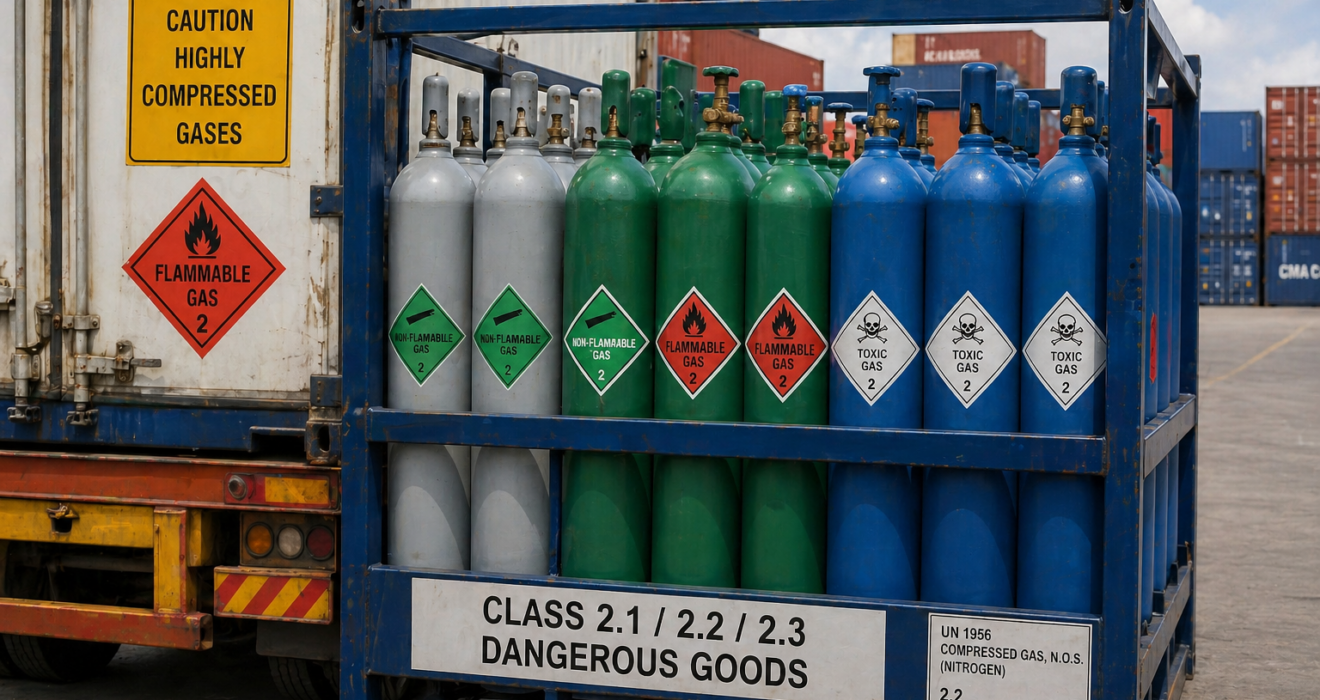
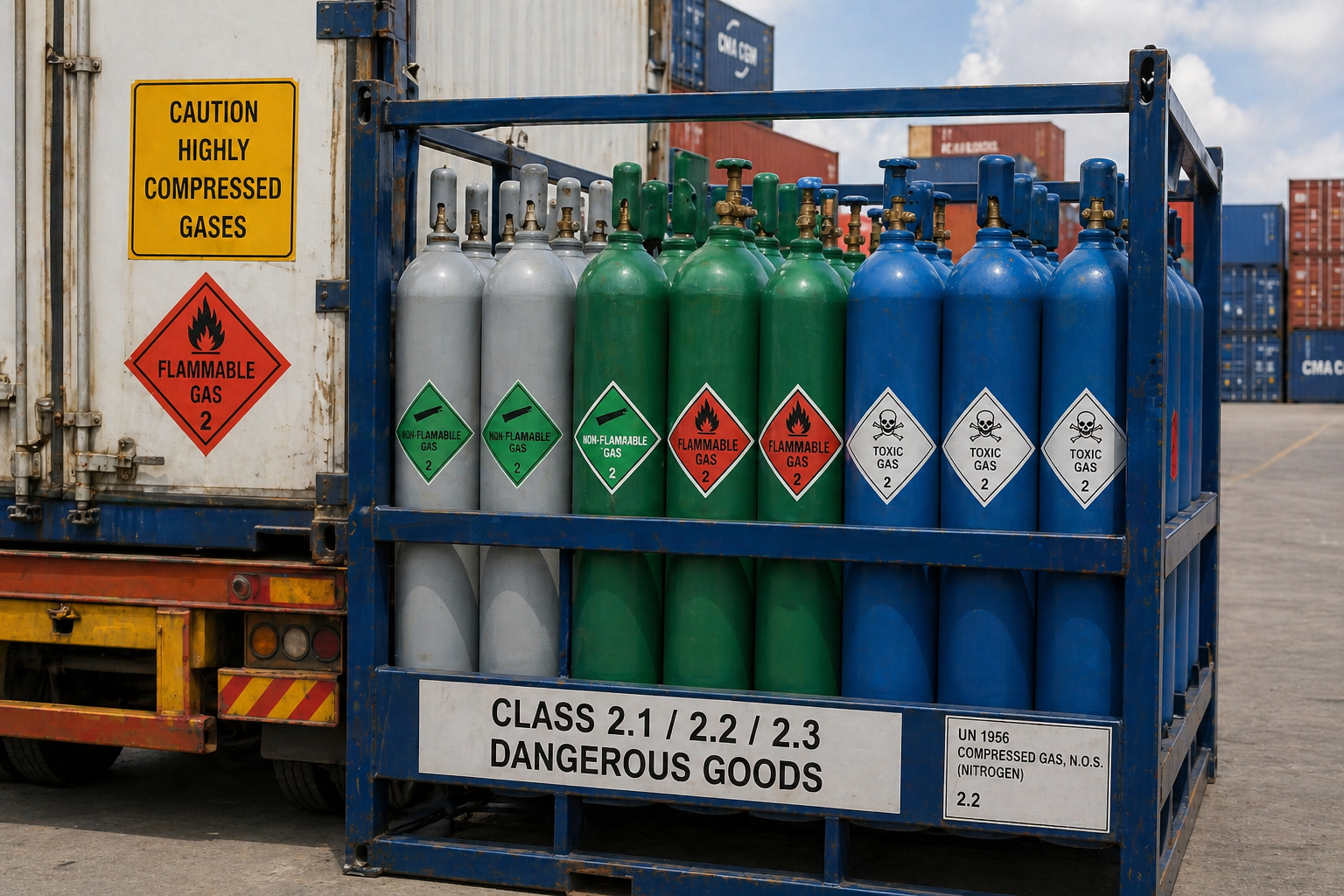
Class 2 dangerous goods consist of gases stored under pressure. These may be compressed, liquefied, or dissolved and are regulated under IMO guidelines for sea freight.
Typical examples include:
- Industrial gases
- Refrigerant gases
- Medical oxygen
- Chemical gases
Due to their pressurized nature, these goods require controlled handling and transport conditions.
Classification of Class 2 Gases
Class 2 is divided into three categories based on hazard level.
Class 2.1 – Flammable Gases
These gases can ignite easily when exposed to heat or sparks.
Examples include:
- Propane
- Butane
- Hydrogen
Shipping considerations:
- Strict segregation requirements
- Fire safety measures
- Approved cylinders or tanks
Class 2.2 – Non-Flammable, Non-Toxic Gases
These gases do not burn and are not toxic but may pose risks due to pressure or asphyxiation.
Examples include:
- Nitrogen
- Carbon dioxide
- Refrigerant gases
Shipping considerations:
- Pressure control
- Ventilation requirements
- Cylinder integrity
Class 2.3 – Toxic Gases
These gases are hazardous to human health and require the highest level of control.
Examples include:
- Chlorine
- Ammonia
- Sulfur dioxide
Shipping considerations:
- Special approvals
- Enhanced safety protocols
- Emergency response planning
Packaging and Handling Requirements
Class 2 gases must be transported in approved containers such as:
- High-pressure cylinders
- Cryogenic tanks
- ISO tanks (for bulk transport)
Key requirements include:
- Proper labeling and hazard identification
- Pressure testing certification
- Secure loading and lashing
- Leak-proof handling systems
Non-compliance can lead to severe penalties and shipment rejection.
Documentation for Class 2 Gas Shipping
Accurate documentation is critical for compliance and safe transport.
Required documents include:
- MSDS (Material Safety Data Sheet)
- Dangerous Goods Declaration (DGD)
- Packing List
- Commercial Invoice
- Cylinder test certificates (if applicable)
Each document must reflect correct classification (2.1, 2.2, or 2.3).
Shipping Process from India
The process typically includes:
- Gas classification and documentation preparation
- Packaging verification and compliance checks
- Booking with DG-approved shipping lines
- Port handling and safety inspection
- Ocean transport
- Destination clearance and delivery
Coordination between shipper, forwarder, and port authorities is essential.
Cost Factors for Gas Shipping
Shipping costs depend on multiple variables:
- Gas type and classification (2.1, 2.2, 2.3)
- Packaging and container type
- Volume and weight
- Handling and safety requirements
- Destination port
Due to safety requirements, Class 2 shipments generally incur higher charges than standard cargo.
Common Challenges
Exporters often encounter:
- Incorrect classification of gases
- Non-compliant cylinders or tanks
- Incomplete documentation
- Delays due to safety inspections
These challenges can impact timelines and increase costs.
Why Choose Aipex Worldwide
Aipex Worldwide provides specialized handling for Class 2 gas shipments from India, including:
- Expertise in all subclasses (2.1, 2.2, 2.3)
- Compliance with IMO regulations
- Documentation and certification support
- Coordination with approved carriers and ports
- End-to-end logistics management
This ensures safe and compliant transport of gas cargo.
Get Expert Support
If you are shipping gases from India, proper classification and compliance are essential.
Aipex Worldwide offers:
- Technical guidance on Class 2 gases
- Documentation support
- Safe and compliant shipping solutions
Contact our team for professional assistance.
Class 2 gas shipping involves technical complexity and strict regulatory oversight. With the right expertise, exporters can ensure safe transport, regulatory compliance, and efficient delivery across global markets. Contact Aipex Worldwide Now.