
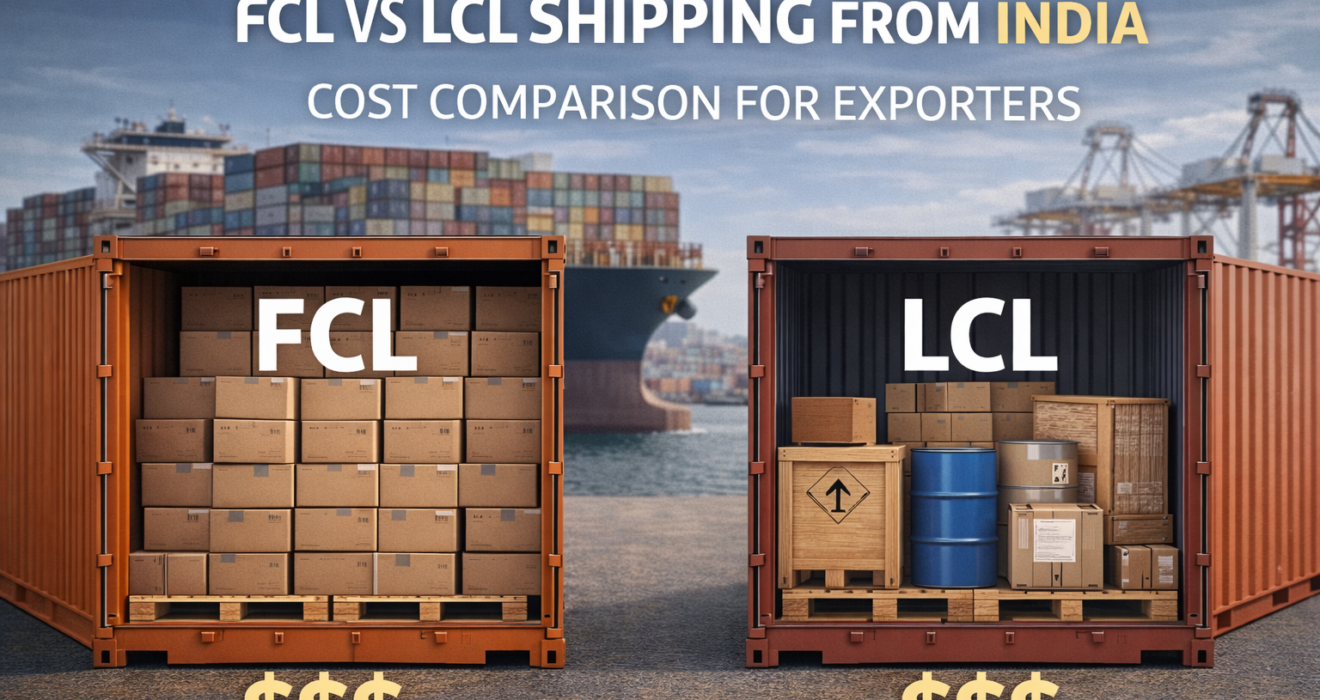
FCL vs LCL Shipping from India: Cost Comparison for Exporters
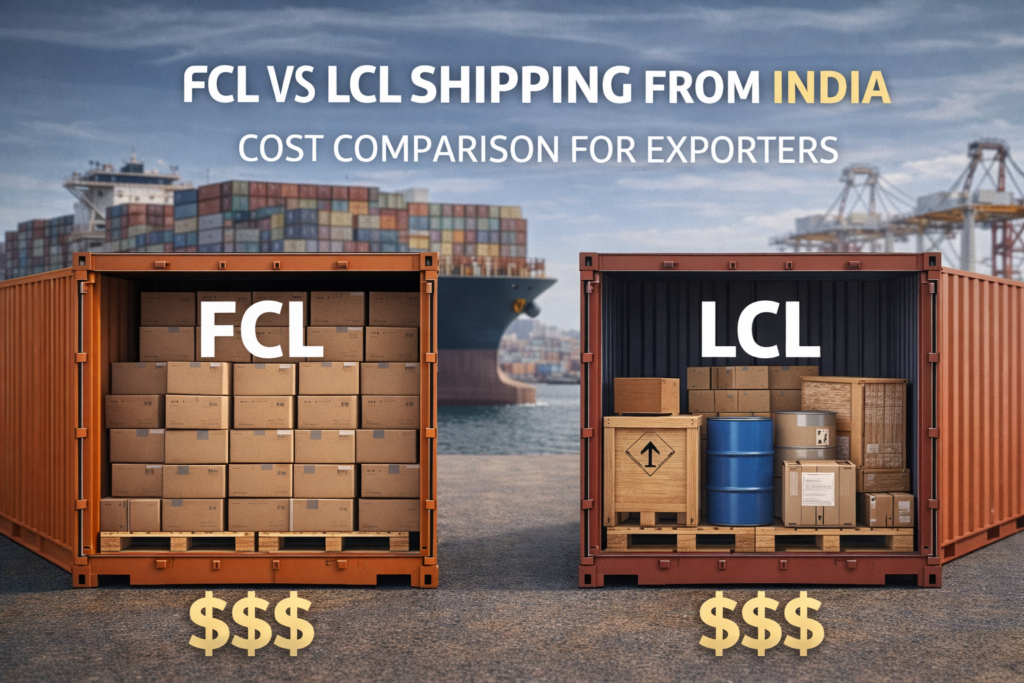
FCL vs LCL Shipping: Which One Actually Saves You Money?
If you’re exporting from India, this decision affects your margins immediately.
Do you:
-
Book a full container?
-
Or share space with other shipments?
The debate around FCL vs LCL shipping isn’t just about container size.
It’s about cost efficiency, cargo safety, and speed.
Let’s break it down clearly.
What is FCL Shipping?
FCL (Full Container Load) means you book an entire container for your cargo.
You don’t share space. You don’t share risk.
Exporters with consistent or high-volume shipments prefer this option. Why?
Because once your cargo fills around 60–70% of a container, FCL usually becomes more economical per unit.
👉 If you’re moving bulk shipments regularly, explore our FCL ocean freight solutions to see how dedicated containers improve control and predictability.
What is LCL Shipping?
LCL (Less than Container Load) allows you to share container space.
You only pay for the space you use.
This works well for:
-
Small shipments
-
New exporters
-
Trial export orders
👉 For smaller volumes, our LCL shipping services help reduce upfront logistics costs while maintaining reliability.
However, consolidation means additional handling — which may increase transit time slightly.
FCL vs LCL Shipping: Cost Breakdown
Here’s where exporters make mistakes.
With FCL:
-
Fixed container cost – Example USD 150 for 20Ft and USD 200 for 40HC
-
Lower handling charges
-
Faster port processing
-
Less cargo risk
With LCL:
-
Pay per cubic meter – Example – USD 5 per CBM
-
Consolidation charges
-
Higher handling touchpoints
-
Possible longer transit time
If your shipment is small, for example, 1 to 5 CBM, LCL saves money.
If your shipment is medium-to-large example, above 14 CBM, FCL reduces cost per unit.
That’s why cost planning should consider total landed cost — not just freight.
Transit Time Comparison
From India to UAE, transit time typically ranges from 4–7 days port-to-port.
However:
-
FCL often clears faster
-
LCL may require consolidation time
In addition, customs documentation must align with standards from Central Board of Indirect Taxes and Customs to avoid delays.
Risk & Cargo Safety
FCL offers better security because your cargo stays sealed in one container.
LCL shipments are handled multiple times during consolidation and deconsolidation.
For fragile, high-value, or regulated cargo, FCL is usually safer.
If you’re shipping dangerous goods, consider working with experts in hazardous cargo shipping services to ensure compliance with International Maritime Organization regulations.
When Should You Choose FCL?
Choose FCL if:
-
Shipment volume is high
-
You export regularly
-
You need faster delivery
-
Cargo is sensitive
When Should You Choose LCL?
Choose LCL if:
-
Shipment volume is small
-
You’re testing a new market
-
Budget is tight
-
Delivery timeline is flexible
Final Verdict for Exporters
There is no universal winner in the FCL vs LCL shipping comparison.
The right choice depends on:
-
Volume
-
Urgency
-
Cargo type
-
Cost sensitivity
Smart exporters calculate both scenarios before booking.
Not sure which option saves you more?
Get a quick cost comparison from Aipex Worldwide and choose the right shipping model before you book.